
Item 1666Auschwitz Nazi Death Camp
2012. Fifth Edition. Paperback. fine. Item #1666

2012. Fifth Edition. Paperback. fine. Item #1666

Easton Press, 1979. full leather. fine. Item #2801
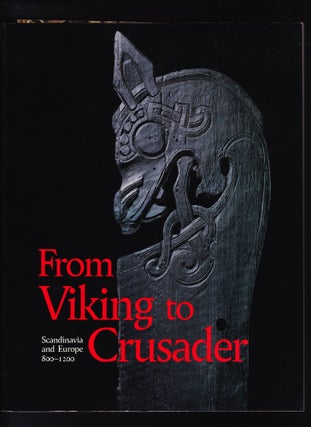
Uddevalla, Sweden: Nodic Council of Ministers in collaboration with the Council of Europe, (1992). The 22nd Council Of Europe Exhibition. Perfect bound paperback. Tight, clean, near perfect condition but for two tiny stains on bottom of page edges of text block.
Text in English. 428 pp. full color Catalog of Exhibition which was displayed at Grand Palais, Paris 2 April to 12 July 1992 and at Altes Museum, Berlin 2 September to 15 November 1992 and Danmarks Nationalmuseum, Copenhagen 26 December 1992 to 14 March 1993. Includes calendar of historical dates, index, extensive bibliography of literature and maps. Many color photos. 222 pp. of explanatory text. Illustrated catalog of all items in exhibit. from p. 224 to 392. There's even a 6th to 7th North Indian statue of Buddha, discovered in the trading center of Helgo.
Included is a trifold pamphlet printed for the Berlin exhibition. ISBN: 8773035580 Item #124
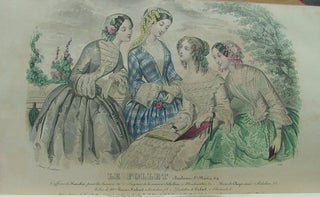
1850. Illustrated with forty-two black and white engravings and eight hand-colored fashion engravings. Full twelve months of 1850 bound together in a thick 8vo. volume 6-1/2" x 10-1/4". Glossy marbled endpapers. At the end of June is the Table of Contents of the Thirty-sixth Volume, Jan. 1850 to June, 1850 and then the hand-colored engraved title page for July. At the end of December is the Table of Contents of the Thirty-seventh Volume, June 1850 through January, 1851 (although January 1851 is not included). At the very back of the book is the title page for August 1850 (weird place for it!) No title pages for any of the other months is included. Light scattered foxing. Otherwise very good. Binding is tight.
Leafing through this book set me to wondering what the workday of a typesetter using this tiny 6 pt. type was like. He must have gone home exhausted. Or maybe he got involved in the story as he set his composing stick. And then how much squinting did the reader have to do? How could you read it by candlelight or kerosene lamplight? Whew! Item #441
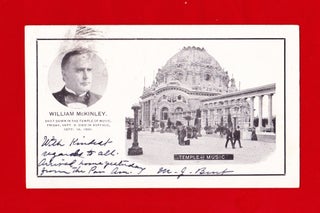
Addressed, stamped and cancelled. Brief message written on front. Overall physical condition is fine.
"Shot down in the Temple of Music, Friday Sept. 6, died in Buffalo Sept. 14, 1901." Item #405

Oberlin College, 1943. Fifty Three Illustrations. First Edition. Cloth. fine. Item #1968

Layout artists guidelines, otherwise in fine condition. Item #262

Manchester England: 1899-October-1935. Soft Cover. very good. Item #1951
New York: Frederick A. Stokes Company, 1919. Numerous illustrations. Thick 8vo. 9-1/2" x 6-3/4". 304 pp. Green cloth covered boards blind stamped and stamped in gold. Bookplate on front pastedown. One page taped, otherwise book is in fine condition.
"Though a lover of peace, Mr. Punch from his earliest days has not been unfamiliar with war. He was born during the Afghan campaign; in his youth England fought side by side with the French in the Crimea; he saw the old Queen bestow the first Victoria Crosses in 1857; he was moved and stirred by the horrors and heroisms of the Indian Mutiny. A little later on, when our relations with France were strained by the Imperialism of Louis Napoleon, he had witnessed the rise of the volunteer movement and made merry with the activities of the citizen soldier of Brook Green. Later on again he had watched, not without grave misgiving, the growth of the great Prussian war machine which crushed Denmark, overthrew Austria, and having isolated France, overwhelmed her heroic resistance by superior numbers and science, and stripped her of Alsace-Lorraine." Item #918
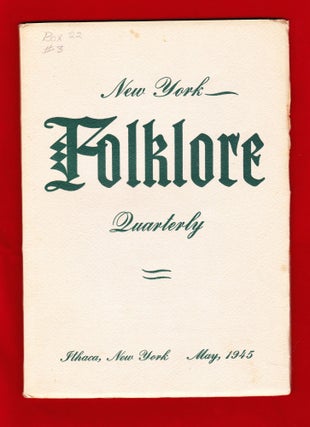
Ithaca, New York: New York Folklore Society, 1945-46. 8vo. 8-1/2" x 6". Perfect bound with heavy paper covers. Tight, clean and overall very good. Some pencil notations on outside of cover. Interiors unmarked.
Four issues: May 1945, August 1945, November 1945, and Winter 1946. Item #1052
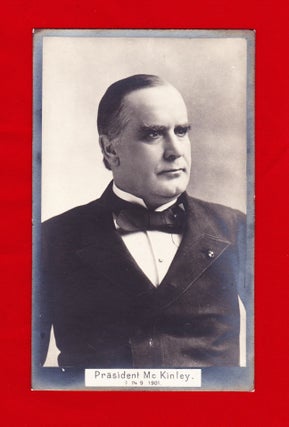
1901. Fine condition, no marking or creasing or soil. Item #404
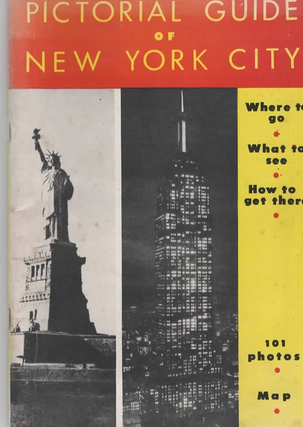
circa 1960. 101 photos. First Edition. Soft cover. Item #2093
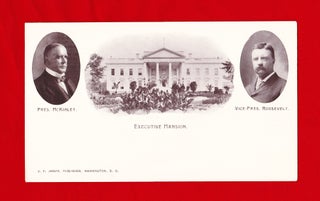
Washington, D.C. J. F. Jarvis. Fine condition, clean and unmarred, no creases.
Image of the Executive Mansion flanked by portraits of Pres. McKinley and Vice-Pres. Roosevelt. Item #403
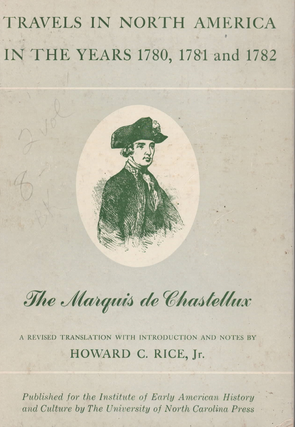
1963. hardcover. very good / slipcase - very good. Item #1703

Detroit: Northwestern Publishing Company, 1875. Brown cloth library binding. Very good, clean and tight. Item #4813

Amsterdam: J.C. Gieben, 1994. First Edition. 8vo. 9-3/4" x 6-1/2". Grey cloth covered boards. 311 pp. including index. Plus 62 pp. of black and white photo illustrations numbering 100 figures in all. Fine condition, almost as new.
Volume XII in the series, Dutch Monographs on Ancient History and Archaeology, editors: F.J.A.M. Meijer and H.W. Pleket. ISBN: 9050630561 Item #1262

Watts, 1982. First Edition. Hardcover. fine / fine. Item #1440

Detroit: Wayne State University Press, 1959. Large 8vo. 9-1/4" x 6-3/8." Paper covered boards with a look of knotty pine. Map endpapers. 184 pp. including index. Wayne State University Library rubberstamp on both half-title p. and title p. Otherwise book is fine. / Dust jacket lightly worn.
Tales of the pioneers, lumberjacks sailors and others who made history in the Grand Traverse Region of Michigan. Item #676
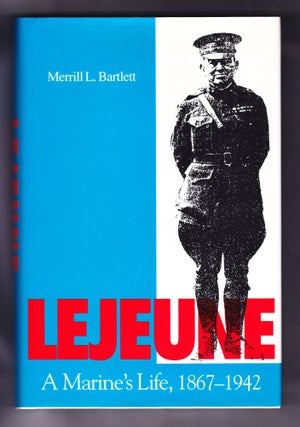
University of South Carolina Press, (1991). Illustrated with photos and maps. 8vo. 9-1/4" x 6-3/8". 214 pp. including index. White leatherette covered boards stamped in gold. Name and date neatly written at top of free front endpaper, else fine. / In fine dust jacket. ISBN: 0872497712 Item #1145
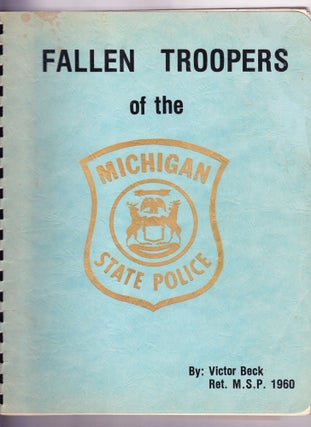
Paw Paw, Michigan: Paw Paw Press, August 1980. With a warm inscription signed by Victor Beck and dated Aug. 31, 1980 on the last page. Stated First Edition. Comb binding. 161 pp. Contains 30 stories of fallen troopers with black and white photographs and photo portraits. Comb binding a little rolled but could be carefully readjusted. Card stock covers are a little faded. One coffee splash at top of front cover. Overall sturdy and clean. Very good.
When the "Michigan State Troops" were signed into existence by Governor Albert Sleeper on March 27, 1919, the force consisted of fifty officers, four cars, five motorcycles, three trucks and an undetermined number of horses.
The Governor probably didn't anticipate that this underequipped, quasi-professional agency would become the Michigan State Police, a modern, efficient law enforcement organization, which today consists of over 2,000 officers and 800 civilian employees, with duties ranging from the "Detroit Freeway Patrol" to protecting the residents of isolated homes and cottages in the upper peninsula.
However, by the nature of the task, and man's inhumanity to man, the road from 1919 was inevitably paved with sacrifice, professional courage and the death in action of a number of officers.
Their stories, and legacy to the living, began on . . . old Grand River Road about three miles west of Novi in the early morning hours. . . . Item #2172

London: Constable and Company, 1913. Illustrated by William Hyde with 16 illustrations and 23 maps. First Edition. 8vo. Brown cloth boards stamped in gold and black. 304 pp. including index. Previous owner's name rubberstamped on free front endpaper. A trace of rubbing to extremities. Overall condition very good to fine.
Tracing the history of the ancient road between London and Chichester, built by the Romans early in the first century AD. Item #913

New York and London: G. P. Putnam's Sons, (1928). First American Edition. Thick large 8vo. 9-9/16" x 6-5/16". 2" thick. 448 pp. including index. Attractive book plate on front pastedown. Item #1215

New York: James Pott & Company, 1901. Binding designed by Margaret Armstrong, with her initials in the bottom right corner of each volume. Two 8vo. volumes, each with its own index. But Indices are identical! 478 pp. and 498 pp. 18 illustrations in vol. I and 16 illustrations in vol. II. Red cloth binding stamped in gold. Red ribbon markers. Top edges gilt. Each volume has a stiff red cloth dust jacket with gold stamped spines to match their books. Ribbon marker in volume I is a little frayed at the end but that is about the extent of damage. These two exquisite volumes, now 120 years old are so beautiful and fresh and bright and untarnished. The sturdy decorative dust jackets have preserved them. Dust jackets were rare in 1901. This is an especially fine set indeed. / Jacket condition is fine also.
The Bastille was the most famous of prisons. Only the Tower of London could be compared with it, and while the Tower has attained a greater age, and has harbored kings, princes, and many of England's most famous sons, yet the Bastille appealed more strongly to the imagination. It seemed the visible symbol of tyranny; mystery hung over the fate of those immured within it; many of them were confined without charge, remained without trial, and suffered without record. In its annals, both romance and history have found abundant material. As is the case with many famous institutions, tradition has somewhat exaggerated its importance. Mr. Bingham tells us that when the Bastille was captured by the Parisian mob, it contained only seven prisoners, obscure and unimportant criminals. It had become no more than an ordinary prison; except as marking the beginning of a Revolution, its overthrow was not deserving of long commemoration. Even in the days when the Bastille was reserved for more dignified offenders, its terrors somewhat diminish as we study history. The most of its inmates were persons of social importance, and they usually had all the comforts that were consistent with restraint. During the reign of Louis XV, many persons famous in literature were sent to the Bastille, in order to manifest the government's disapproval of their views. Item #684
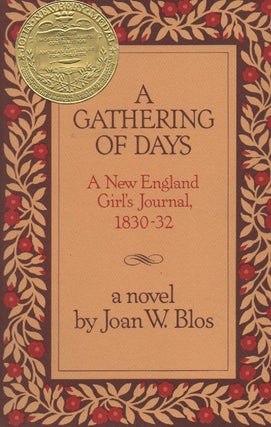
Inscribed and signed by the author. Later printing. Hardcover. fine / fine. ISBN: o684163403 Item #1454

The California Gold Marketing Group, [2002]. Signed by Q. David Bowers, Tommy Thompson, Robert Evans, and Dwight Manley on bookplate pasted on front pastedown endpaper. This edition was limited to 4000 copies. Black cloth binding with a leatherette finish. Fine. A 1/2" tear at top of spine. Binding is tight. Hinges are sound. ISBN: 0943161878 Item #4812